


Medicare Working Past 65 & Retirement Guide
Many Americans continue working beyond age 65, whether by choice or necessity. If that’s your situation, understanding how Medicare works with employer health insurance is essential. Enrolling too early, waiting too long, or misunderstanding your options can affect your coverage, Health Savings Account (HSA), and future Medicare costs.
This guide explains what you need to know about Medicare working past 65 and how to prepare for retirement with confidence.

Can You Delay Medicare If You’re Working Past 65?
You can delay your enrollment in Medicare Part B when you are covered under an employer’s health care plan of 20 or more employees that is considered “creditable” coverage – meaning it is as good as Medicare or better. Ask your HR director if your plan is “creditable” coverage.
Delaying enrollment without qualifying coverage could result in a Medicare Part B penalty working past 65, so it’s important to understand your specific situation before deciding.
What Happens When You Retire?
Generally, when you no longer have employer coverage, you are entitled to Medicare Special Enrollment Period retiring. This allows you to enroll in Medicare without having to wait for the Annual Enrollment Period.
This Special Enrollment Period generally lasts eight months after your employment or employer’s health coverage ends to obtain Part B and two months obtain Part Enrolling during this time helps you avoid gaps in coverage and potential late enrollment penalties.


Medicare and HSA Contributions
If you’re contributing to a Health Savings Account (HSA), while having Medicare – even just part A – could cause you to incur a penalty.
Once a person enrolls in Medicare, you and your employer should stop HSA contributions. If contributions continue after that, taxes may need to be paid.
When preparing for retirement and getting into Medicare, make sure to work on your HSA issue accordingly to prevent unexpected problems from occurring.
Does COBRA Replace Medicare?
Many retirees wonder whether COBRA coverage allows them to delay Medicare enrollment.
COBRA may facilitate a temporary continuation of the health benefits you received from your employer after you have left the job, but it does not qualify as acceptable coverage for postponing your Medicare Part B enrollment.
If you rely solely on COBRA and delay Medicare part B for more than 8 months when you’re first eligible, you may face late enrollment penalties and gaps in coverage.

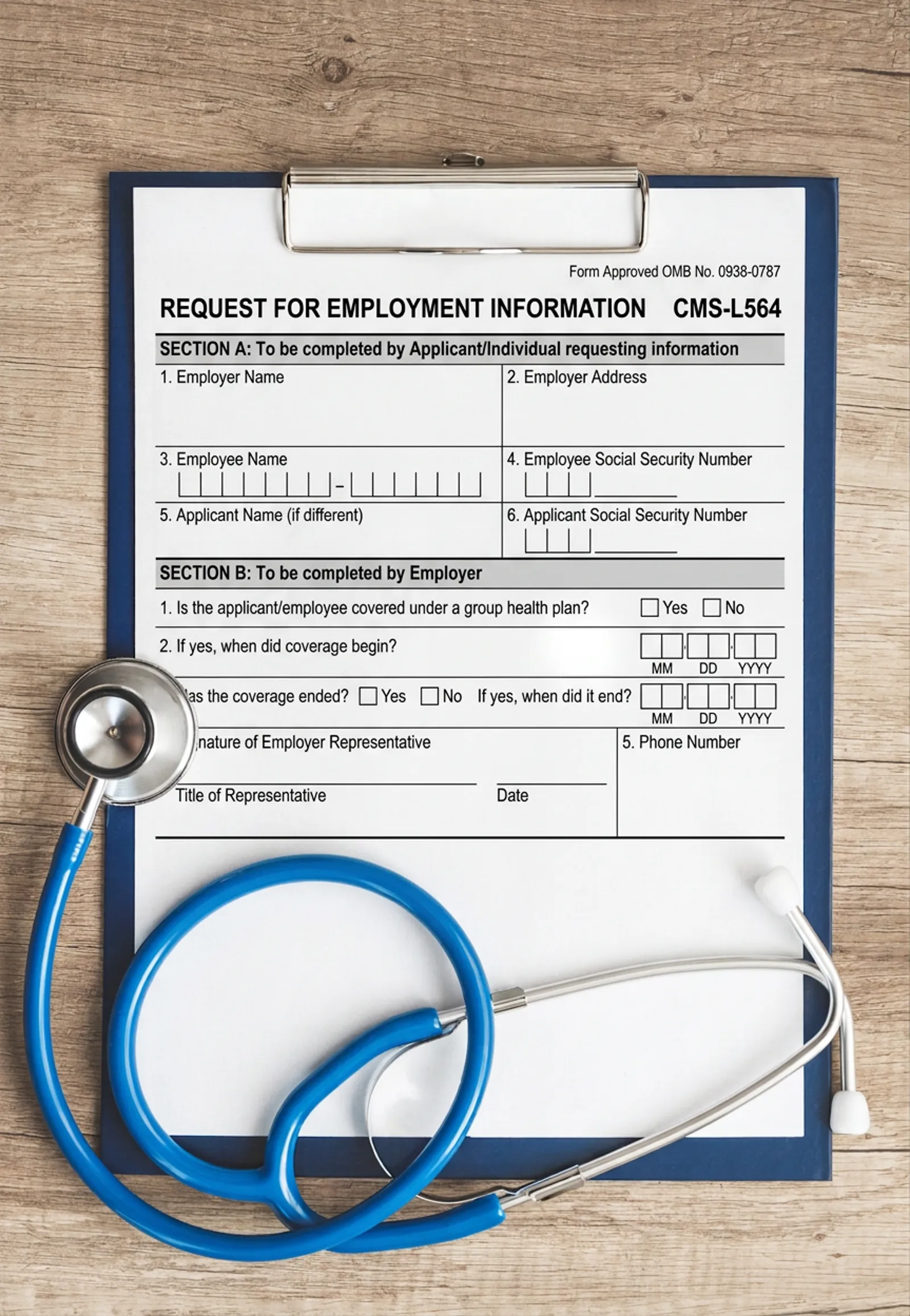
What Is the CMS-L564 Form?
If you delayed Medicare because you had employer-sponsored health insurance, you should have your employer sign the CMS-L564 form Medicare when you’re ready to enroll.
This form is completed by your employer to verify your health coverage and employment. It helps demonstrate that you delayed Medicare for an approved reason and may help you avoid late enrollment penalties.
Completing the required paperwork before retirement can help make your Medicare enrollment process much smoother.
Why Work with an Independent Insurance Specialist?
Every retirement situation is different. Employer coverage, retirement dates, COBRA, HSAs, and enrollment deadlines all affect your Medicare decisions.
Working with an experienced insurance agent specializing in Medicare near Houston Texas who residents trust can help you:
- Understand your Medicare enrollment timeline.
- Coordinate employer coverage with Medicare.
- Compare Medicare Advantage, Medigap, and prescription drug plans.
- Avoid enrollment mistakes and unnecessary penalties.
- Choose coverage that fits your healthcare needs and retirement plans.
At Houston Independent Insurance, we provide independent guidance and personalized plan comparisons so you can make informed Medicare decisions with confidence.

If you prefer learning by video, this short overview explains how Medicare works when you’re still working or preparing to retire.
What Our Customers Say


Have questions about your specific situation?
Ask a Medicare Question
Serving Houston and all of Texas.
Call or Text Now
Frequently Asked Questions
Can I delay Medicare if I'm still working after 65?
Yes, if you’re covered by a qualifying employer health plan, you may be able to delay Medicare Part B without penalties. Your eligibility depends on your employment and coverage details.
What is a Medicare Special Enrollment Period?
SEP is a time that is open after someone leaves their employer coverage during which they can enroll in Medicare without incurring late penalties while enrolling outside the Annual Enrollment Period.
Can I contribute to my HSA after enrolling in Medicare?
Generally, no. Once you’re enrolled in Medicare, you should no longer make new HSA contributions, although you may still use existing HSA funds for qualified medical expenses.
Does COBRA count as “creditable” coverage?
No. COBRA extends employer health coverage temporarily but is not considered creditable coverage instead of Medicare part B or protect you from Medicare late enrollment penalties if you delay enrollment too long.
What is the CMS-L564 form used for?
The CMS-L564 form verifies that you had qualifying employer health coverage while delaying Medicare enrollment. It helps support your application during your Special Enrollment Period and may help you avoid late enrollment penalties.